
IM Injection Therapy: B12, D3, NAD+ and Glutathione Explained
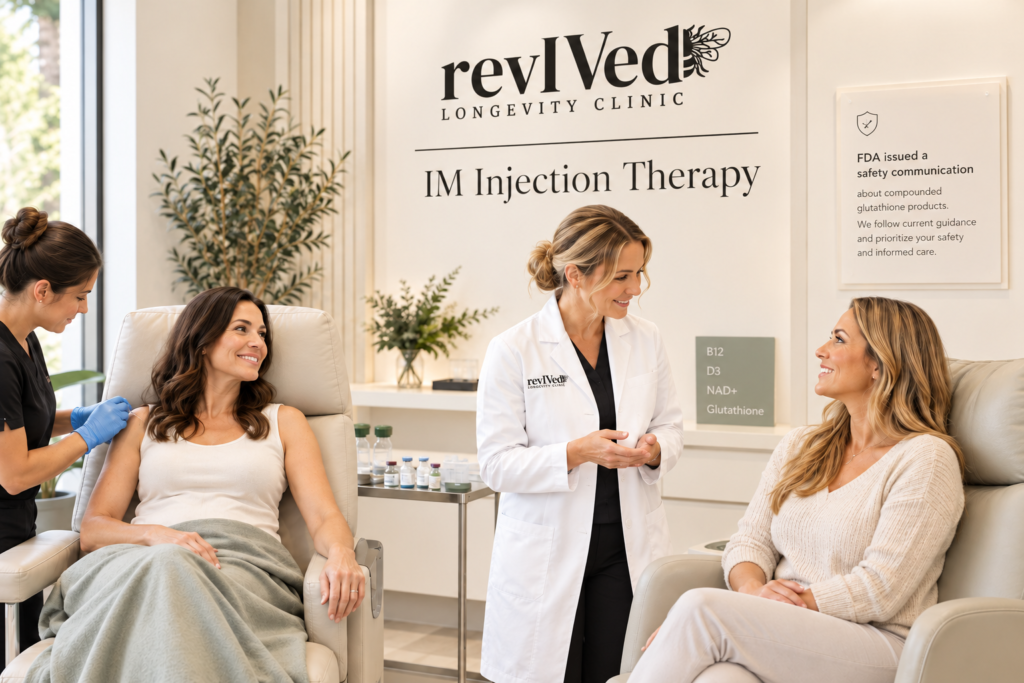
B12 shots have become a regular fixture on med-spa menus, usually sold next to anti-aging facials and metabolism boosters. Clients ask for them by name, often without knowing what the injection actually does once it’s in their system.
IM injection therapy delivers a substance directly into muscle tissue rather than through the digestive tract. For vitamin B12, a nutrient involved in energy metabolism, nerve function, and red blood cell formation, this route can matter when absorption is a concern.
IM therapy can deliver several substances, including Vitamin B12, Vitamin D3, NAD+, or compounded Glutathione. These options are not interchangeable. Each has a different purpose, formulation, evidence base, and reason for use.
But that simple explanation doesn’t capture why clinics pair B12 with anti-aging regimens. Is the science strong enough to justify the pairing? Does everyone benefit, or only deficient people to begin with?
Curious enough? Keep reading.
What is an IM Injection Treatment and What Does it Include?
What Does “IM Injection” Mean?
IM stands for intramuscular. It means a medication, vitamin, nutrient, or other compound is delivered directly into muscle tissue.
Common injection sites include the upper arm, thigh, or gluteal muscle. The appropriate site depends on the substance, dose, patient, and clinical protocol. The muscle provides a route for delivering certain substances into the body without relying on oral absorption.
What Happens During an IM Injection Treatment?
IM injection treatment usually starts with a health assessment and a discussion of the intended goal.
A qualified provider determines whether the substance and route are appropriate. The injection site is then prepared, the prescribed dose is administered, and the patient is briefly observed afterwards.
The treatment schedule depends entirely on what is being injected. Common IM treatments may include:
- Vitamin B12
- Vitamin D3
- NAD+
- Compounded Glutathione
The key difference is simple. IM describes how something is delivered. The injected substance determines why it is being used.
When is a Vitamin B12 IM Injection Worth Considering?
Vitamin B12 supports red blood cell formation, DNA synthesis, and nerve function. An injectable B12 treatment can make sense if someone has a confirmed deficiency or has a medical reason that makes nutrient absorption from the digestive tract a concern.
That is different from treating ordinary tiredness with B12 simply because fatigue is common. Fatigue has many possible causes, and B12 is not a universal energy injection.
A provider will evaluate bloodwork, symptoms, diet, and health history to determine if supplementation is needed. Treatment frequency also varies. A deficiency-correction plan is different from an elective wellness regimen, so there is no single schedule that applies to everyone.
What Can a Vitamin D3 Injection Do for Your Vitamin D Levels?
Vitamin D helps the body absorb calcium and supports normal bone and muscle function. Yet getting enough vitamin D naturally isn’t always easy.
The body can make enough vitamin D through sun exposure, but factors such as limited outdoor time, darker skin, age, clothing, sunscreen use, and seasonal changes can reduce production. Few foods naturally provide significant amounts of vitamin D, so supplementation may be needed when levels are low.
A vitamin D3 injection may be considered when supplementation is appropriate, and an injectable route fits the person’s circumstances. Blood testing can help determine vitamin D status, while the right treatment depends on the person’s levels, health history, diet, medications, and risk factors.
The question isn’t simply whether a D3 injection sounds useful. It’s whether you need vitamin D supplementation and whether an IM formulation is appropriate for you.
Why are NAD+ IM Injections Becoming Part of Wellness Regimens?
How NAD+ Impacts the Body
NAD+(Nicotinamide Adenine Dinucleotide) is a molecule involved in cellular energy metabolism and several important cellular processes. That biology explains why NAD+ has attracted attention in longevity and wellness programs.
But biological importance does not automatically prove that injecting NAD+ will produce an anti-aging benefit.
What Should You Know About NAD+ Claims?
NAD+ research is promising but still developing. A 2026 systematic review published in Ageing Research Reviews examined NAD+ supplementation and related interventions for anti-aging and wellness. It found clear biological activity but concluded that clinical effectiveness for anti-aging and wellness outcomes remains inconclusive. Importantly, the review found no eligible clinical outcome trials evaluating IV or IM NAD+ itself for these indications.
Where do Glutathione Injections Fit Into Wellness Care?
Why are Compounded Glutathione Injections Used?
Glutathione is an antioxidant naturally produced by the body. It participates in cellular redox processes and helps protect cells from oxidative stress.
A compounded glutathione injection may be offered in wellness or aesthetic settings for antioxidant or skin-related goals. The important distinction is between what glutathione does biologically and what an injectable treatment has been proven to accomplish clinically.
In August of 2026, the FDA issued a safety communication, warning compounders not to use dietary-supplement-grade glutathione to make injectable drugs. The agency said it had received reports of adverse events involving at least 30 patients after IV glutathione, including cases associated with products made from a dietary-supplement-grade glutathione ingredient. The cases involved IV use, but the ingredient-quality concern is relevant to any compounded injectable.
The FDA’s warning is about ingredient quality and suitability for injectable compounding, not a declaration that all glutathione treatments are unsafe. The agency specifically told compounders to ensure every ingredient used in an injectable drug is appropriate for sterile drug production.
How Do B12, D3, NAD+, and Glutathione Injections Compare?
These injections may all use the same IM delivery route, but their intended roles are quite different.
- Vitamin B12: Correcting or preventing B12 deficiency and supporting normal neurological and red blood cell function.
- Vitamin D3: Addressing inadequate vitamin D and supporting calcium absorption, bones, and muscles.
- NAD+: Used in some wellness programs for cellular and energy-related goals, although evidence for anti-aging benefits remains limited.
- Glutathione: Antioxidant-related and wellness or aesthetic applications, with evidence and product quality requiring careful consideration.
The right choice depends on the person’s health status, nutritional needs, goals, and provider assessment.
What Should You Check Before Booking an IM Injection?
Don’t start with the question, “Which injection should I get?” Start with what is actually being injected and why. Ask your provider:
- What is the exact substance and dose?
- Why is IM delivery appropriate?
- Is bloodwork needed first?
- How often will treatment be given?
- What side effects or interactions should I know about?
- Are there medical conditions that make this treatment unsuitable?
- If the product is compounded, which pharmacy prepares it?
- Where did the pharmacy source the active ingredient?
- How is the injectable product stored and handled?
- Is the treatment intended to correct a deficiency or support a wellness goal?
These questions help separate a medically appropriate treatment from a generic injection menu.
How Should You Choose an IM Injection for Your Actual Needs?
The best IM injection is not the one with the longest list of promised benefits. It is the one that matches a specific need.
B12 makes sense in a different situation from D3. NAD+ belongs to a different evidence category from nutrient replacement. Compounded glutathione raises additional questions about formulation and sterile preparation.
A qualified provider should consider your health history, current medications, symptoms, laboratory results when appropriate, and the reason you want treatment.
At Revived Kansas, the conversation should start with your goals and health needs rather than simply choosing an injection from a menu. Ask about the specific formulation, intended benefit, treatment schedule, and whether the option is appropriate for you. Book a consultation to see whether an IM injection is right for you.
FAQs
How often can you get an IM injection?
There is no universal IM injection schedule. Frequency depends on the substance, dose, reason for treatment, medical history, and provider’s treatment plan. B12, D3, NAD+, and glutathione can have different dosing schedules.
Are B12 and D3 injections the same as wellness injections?
Not necessarily. B12 and D3 injections may be used to address specific nutrient deficiencies or inadequate levels. NAD+, and glutathione may also appear in broader wellness programs, depending on the provider and formulation.
Can NAD+ injections help with anti-aging?
NAD+ has important roles in cellular metabolism, but that does not prove that injected NAD+ slows human aging. Current clinical evidence for NAD+-based anti-aging and wellness outcomes remains inconclusive, particularly for IM NAD+ itself.