
Muscle Gain vs. Fat Loss: Why BMI Distorts Your Actual Weight Loss Progress
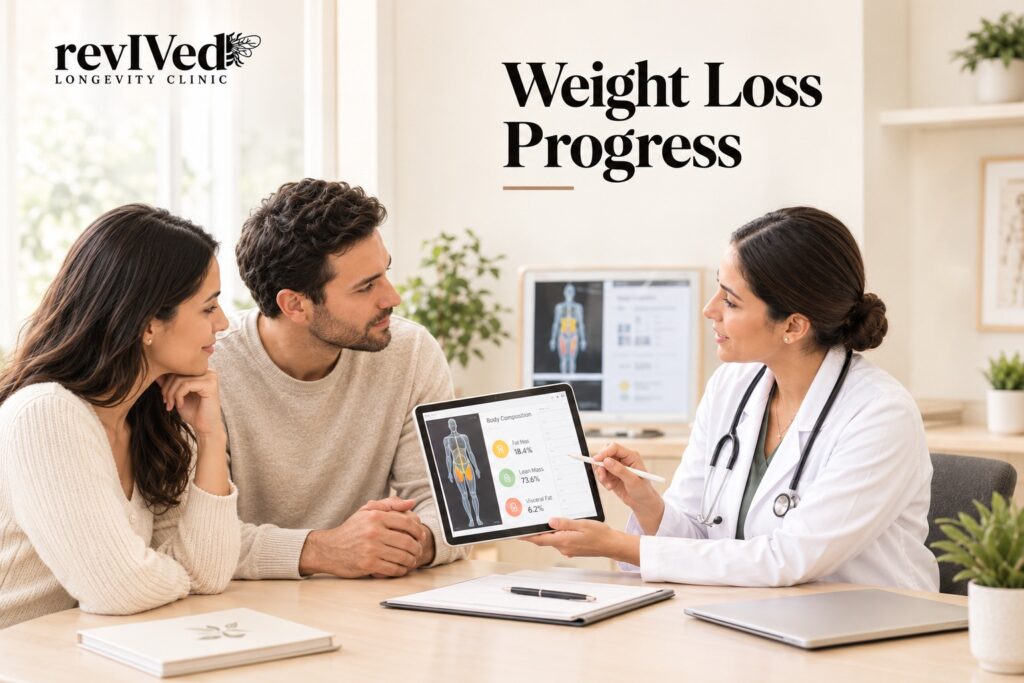
You can lose inches, feel stronger, and improve your health without seeing a dramatic change on the scale. That’s because body weight doesn’t tell you how much of that change comes from fat, muscle, water, or other tissues. BMI has value as a screening tool, but it cannot measure body composition or explain every change happening in your body.
During weight loss, preserving lean muscle and reducing excess fat can be more meaningful than simply reaching a lower number, and tracking your weight loss progress this way gives a fuller picture than the scale alone. A thorough evaluation looks at these changes alongside metabolic health, symptoms, physical function, and your individual goals.
BMI Measures Weight, Not Your Complete Health Picture
What BMI Actually Tells You
BMI is a calculation based on height and weight. Healthcare professionals use it as a screening tool for identifying weight-related health patterns. That makes BMI useful. It shouldn’t be dismissed entirely.
One of the key BMI limitations is that it doesn’t distinguish between fat mass and lean muscle mass. Two people can have the same BMI while having very different body compositions and health profiles.
Where BMI Falls Short During Body Recomposition
Body recomposition describes a change in the balance between fat mass and lean mass. You may lose fat while maintaining or gaining muscle.
When that happens, your scale weight may change slowly. Your BMI may also remain relatively similar.
BMI also doesn’t show where body fat is stored. That’s important because abdominal and visceral fat can carry different health implications than fat stored elsewhere. So, does your body mass index (BMI) really matter for weight loss? Yes, but it is only one piece of the assessment.
Muscle Gain vs. Fat Loss: Why the Scale Can Stall
Weight loss isn’t always the same as fat loss. Your total body weight includes fat, muscle, water, glycogen, bone, organs, and other tissues. Changes in several of these components can occur during treatment.
For example, someone may lose body fat while preserving lean muscle through adequate nutrition and resistance training. Another person may lose weight quickly but also lose substantial lean tissue.
Those two outcomes can look very different on the scale, which is why real weight loss progress should be measured by more than the number it shows. The goal shouldn’t simply be to make the number smaller. It should be to improve body composition while supporting health, physical function, and long-term sustainability.
The Scale Can Move Slowly While Your Body Changes
Consider someone whose weight changes very little over several months. Their waist becomes smaller, their strength improves, and testing shows less visceral fat with preserved lean muscle.
That is meaningful progress. Energy levels, mobility, endurance, clothing fit, and physical performance can also provide valuable information. These changes help explain what the scale cannot.
A More Complete Way to Measure Weight Loss Progress
A comprehensive approach starts with a broader question: What is changing in your body and health? That means looking beyond weight and considering several measures together.
Body Composition Can Reveal Changes BMI Misses
Body composition testing provides clear data about fat mass and lean muscle mass.
DEXA Scan: A dual-energy X-ray Absorptiometry (DEXA) Scan is the clinical gold standard. It gives you precise data. By pinpointing regional fat, lean tissue, and visceral fat, a DEXA scan shows exactly where your body is changing.
Body Composition Scans: Access to a DEXA scan isn’t always possible. In those cases, standard body composition scans like bioelectrical impedance can be a useful alternative. These scans aren’t perfect because they carry a slight margin of error. However, they are close enough to set a solid baseline and track your progress over time.
Preserving lean tissue during your weight loss protects your strength, mobility, and everyday independence. A great weight loss plan doesn’t just reduce scale weight, but it also improves your body composition.
Metabolic and Cardiovascular Markers Add Another Layer
Weight and body composition don’t tell the entire health story either.
Depending on the individual, laboratory testing may provide additional information through metabolic markers such as A1C, glucose, cholesterol and other lipids, triglycerides, and ApoB when clinically appropriate.
These markers can help identify changes that aren’t visible in the mirror or reflected by BMI. They can also help put weight-management decisions into a broader health context.
The appropriate testing depends on your health history, risk factors, symptoms, and treatment goals. Not everyone needs every test.
How We Evaluate Whether Treatment Is Actually Working
A comprehensive weight loss assessment combines objective measurements with what you are experiencing day to day.
Symptoms and Physical Function Matter
Numbers are helpful, but they don’t replace the patient’s experience, and real weight loss progress includes how you feel day to day, not the numbers alone. Changes in energy, sleep, mobility, exercise tolerance, appetite, pain, and physical function can influence whether a treatment is working for you.
Quality of life is also very important. A treatment plan should support your ability to participate in the activities that matter to you. That might mean walking comfortably, exercising, keeping up with family, improving stamina, or simply feeling better throughout the day.
Listening Is Part of the Assessment
A comprehensive evaluation also starts with a conversation. What have you tried before? What worked? What didn’t? What concerns you about treatment? How do you feel now compared with several months ago?
Your individual goals matter because personalized weight management isn’t identical for everyone.
Some patients want meaningful fat loss. Others may prioritize improving metabolic health, maintaining muscle, increasing energy, or becoming more physically active. Those goals should shape the evaluation.
When Should You Reassess Your Weight-Loss Approach?
A weight-loss plateau isn’t a failure. Instead of focusing solely on the scale, evaluate progress through body fat changes, muscle retention, metabolic markers, and physical function.
If these metrics also stall, reassess your plan’s nutrition, training, and lifestyle factors to better align with your individual health goals.
BMI Should Inform Treatment, Not Define It
BMI is a useful screening tool, but it shouldn’t define your entire health or treatment success.
You can significantly improve stored abdominal fat, body composition, lab-based health markers, strength, energy, or quality of life even if your BMI barely changes. Conversely, a lower scale weight does not automatically mean better health.
A better framework asks several questions:
- What is happening to body fat?
- Is lean muscle being preserved or improved?
- Has fat stored around the organs changed?
- Are metabolic and cardiovascular readings moving in a healthier direction?
- How does the patient feel and function?
- Are the results aligned with the patient’s goals?
That provides a much more meaningful picture of weight loss progress.
Measure the Health Changes That Matter to You
Weight management shouldn’t be reduced to a single number. BMI can provide useful context, but a broader evaluation can reveal much more about your true weight loss progress. Body composition, fat stored around the organs, lean muscle mass, lab-based markers, symptoms, physical function, and quality of life all deserve consideration when appropriate.
Most importantly, the patient should be part of that evaluation. At Revived Kansas, the approach is individualized. We consider your measurements, health markers, experiences, concerns, and goals rather than focusing solely on what the scale says.
If your weight hasn’t changed dramatically but you feel stronger, your body composition has improved, or your metabolic health is moving in the right direction, those changes deserve to be recognized. Reach out to us today.
FAQs
Can you lose fat without losing weight?
Yes. Losing body fat while preserving or gaining lean muscle can result in relatively little change in total body weight. Changes in waist size, body composition, strength, and fat stored around the organs can provide additional evidence of progress.
Is BMI accurate for people who lift weights?
BMI can still provide useful screening context, but higher muscle mass can make it less representative of body-fat levels. Looking at body composition and other health measures can provide a more complete assessment. At Revived Kansas, we take this into account when reviewing your results.
What is better than BMI for tracking fat loss?
There isn’t one perfect replacement. Waist measurements, body composition testing, DEXA scans when appropriate, strength, lab-based health markers, and changes in physical function can all add useful information.
BMI vs. body fat: Which number is more important?
Neither number should define your health by itself. BMI provides useful screening information, while body-fat measurements can offer more detail about composition. A comprehensive evaluation considers both alongside fat distribution, metabolic health, symptoms, physical function, and your individual goals.